Commercial actuators are expensive, so I decided to build my own. What started as a gearbox turned into a full actuator stack — a reducer, and the motor driver that makes it move — because a gearbox on its own can't do anything.
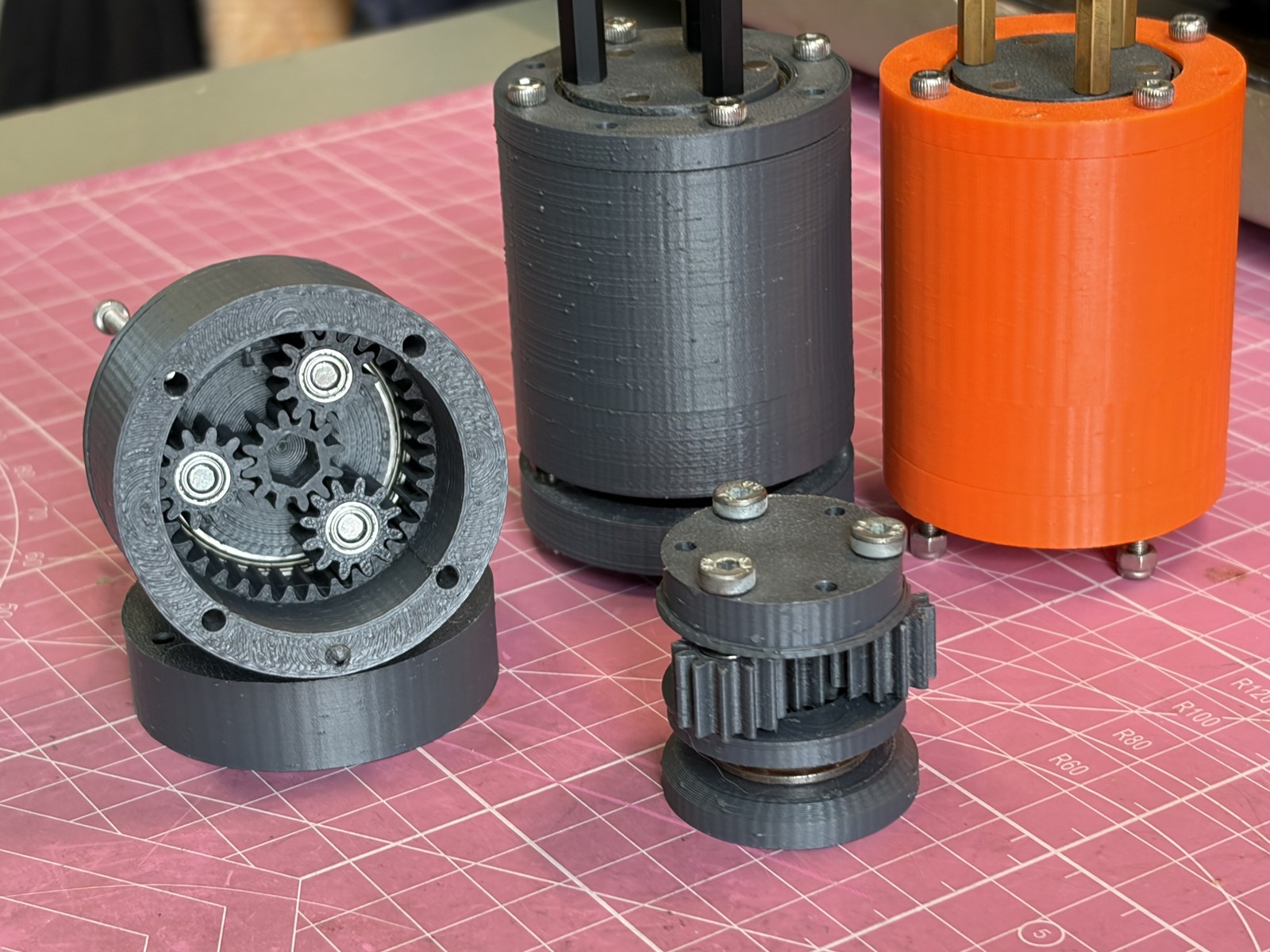
I designed a 4:1 planetary reducer around a 12-tooth sun and 12-tooth planets, working out the gear geometry, the housing and the mounting by hand. It went through more than twelve revisions as I refined the tooth profiles, clearances and the way it bolts onto the motor. The final version is 3D-printed and machined, and I ran it — the output turns.
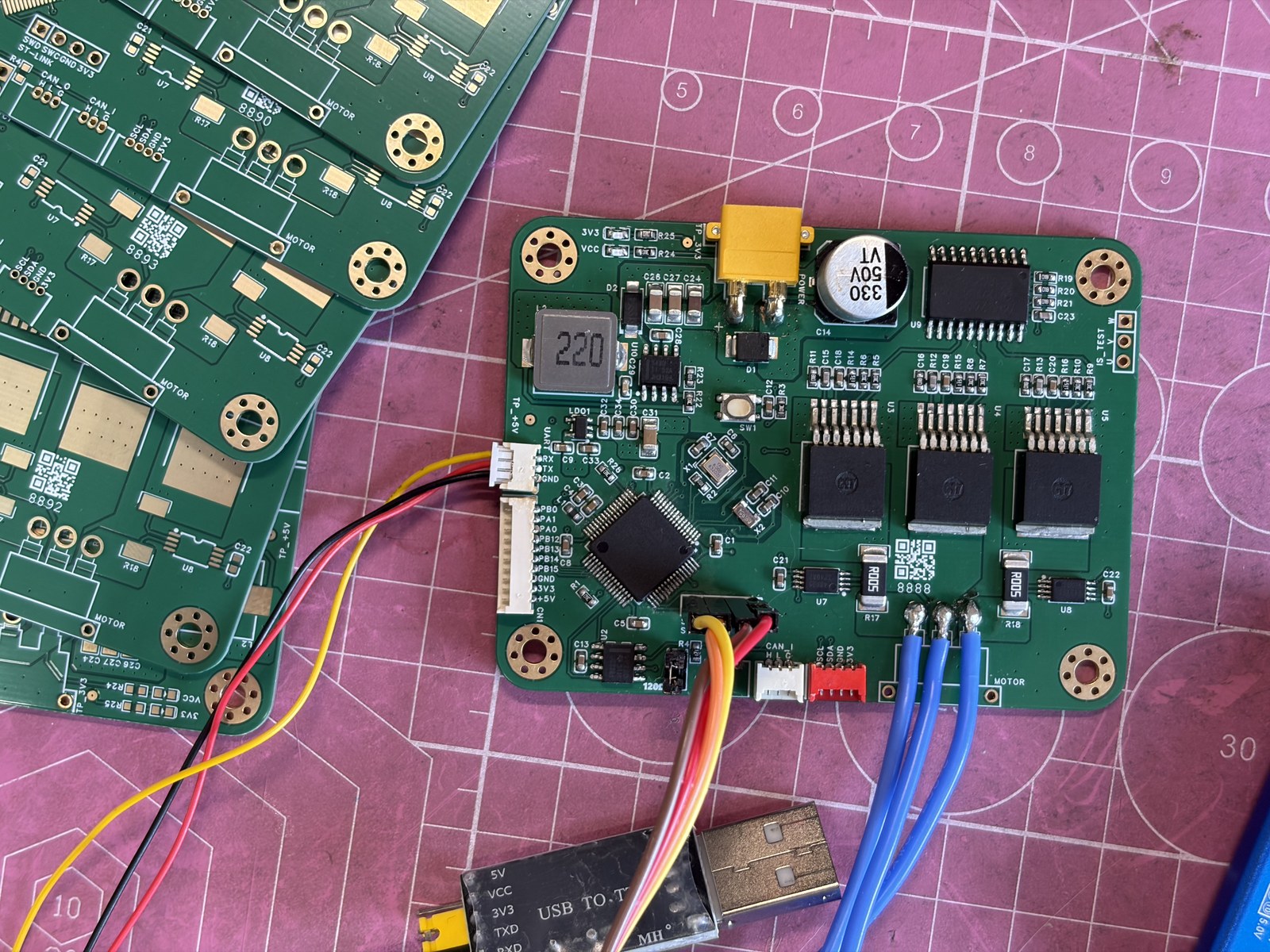
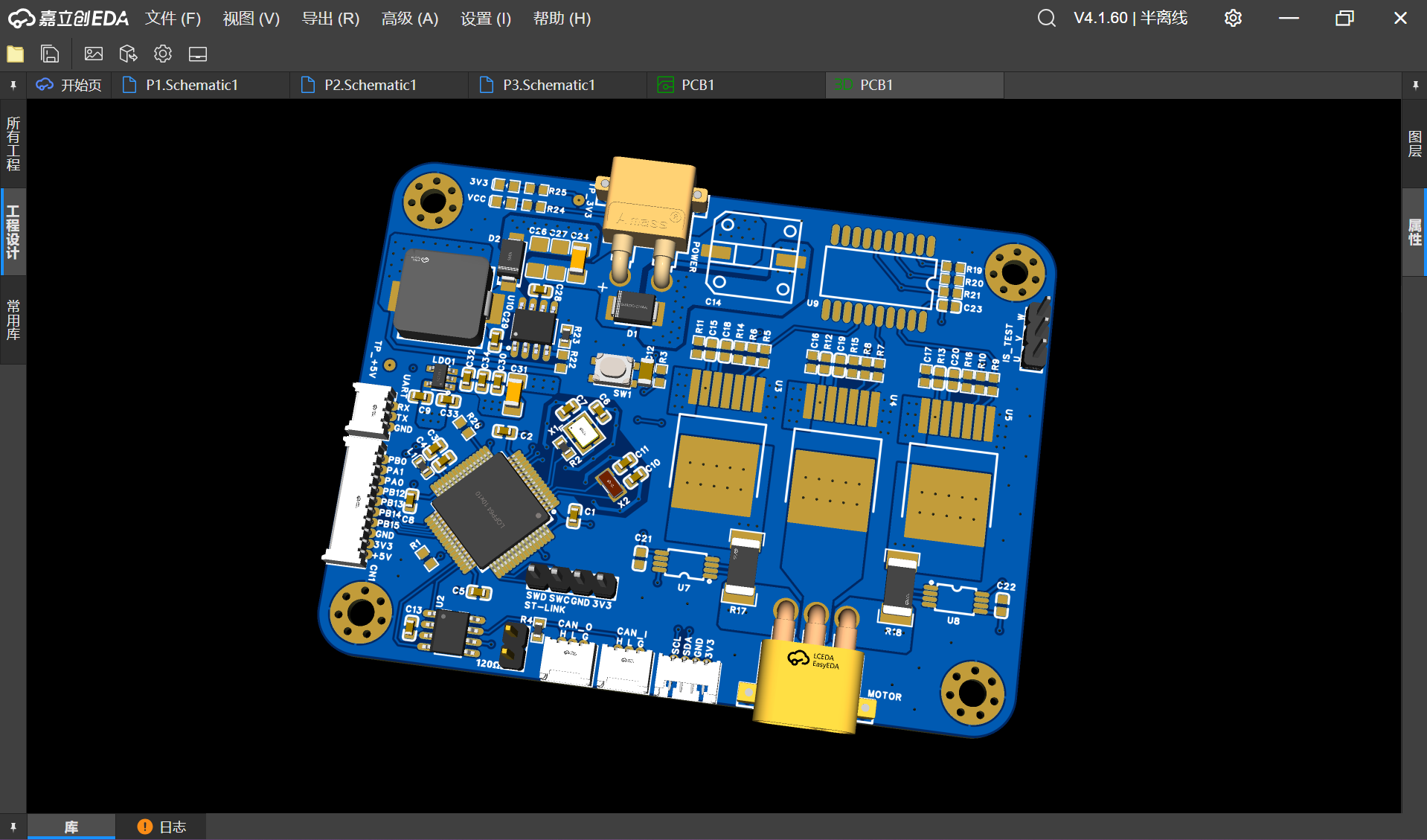
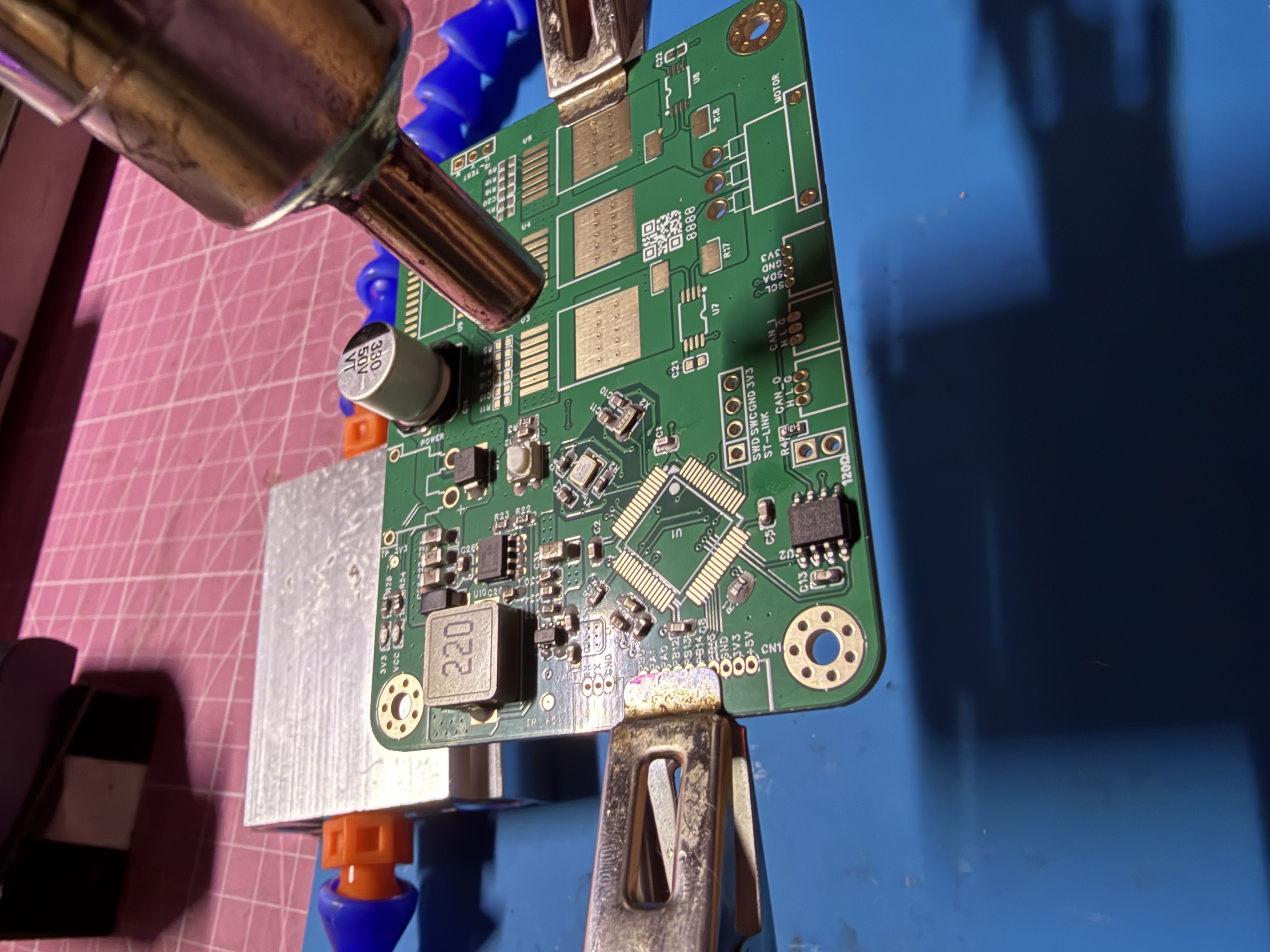
A reducer needs a motor, and a motor needs a driver — so I taught myself the electrical side. I drew the schematic in LCEDA, laid out a dual-channel BLDC board, and wrote the firmware in SimpleFOC using voltage-mode field-oriented control. For feedback I used an AS5600 magnetic encoder and INA240 current sensing.
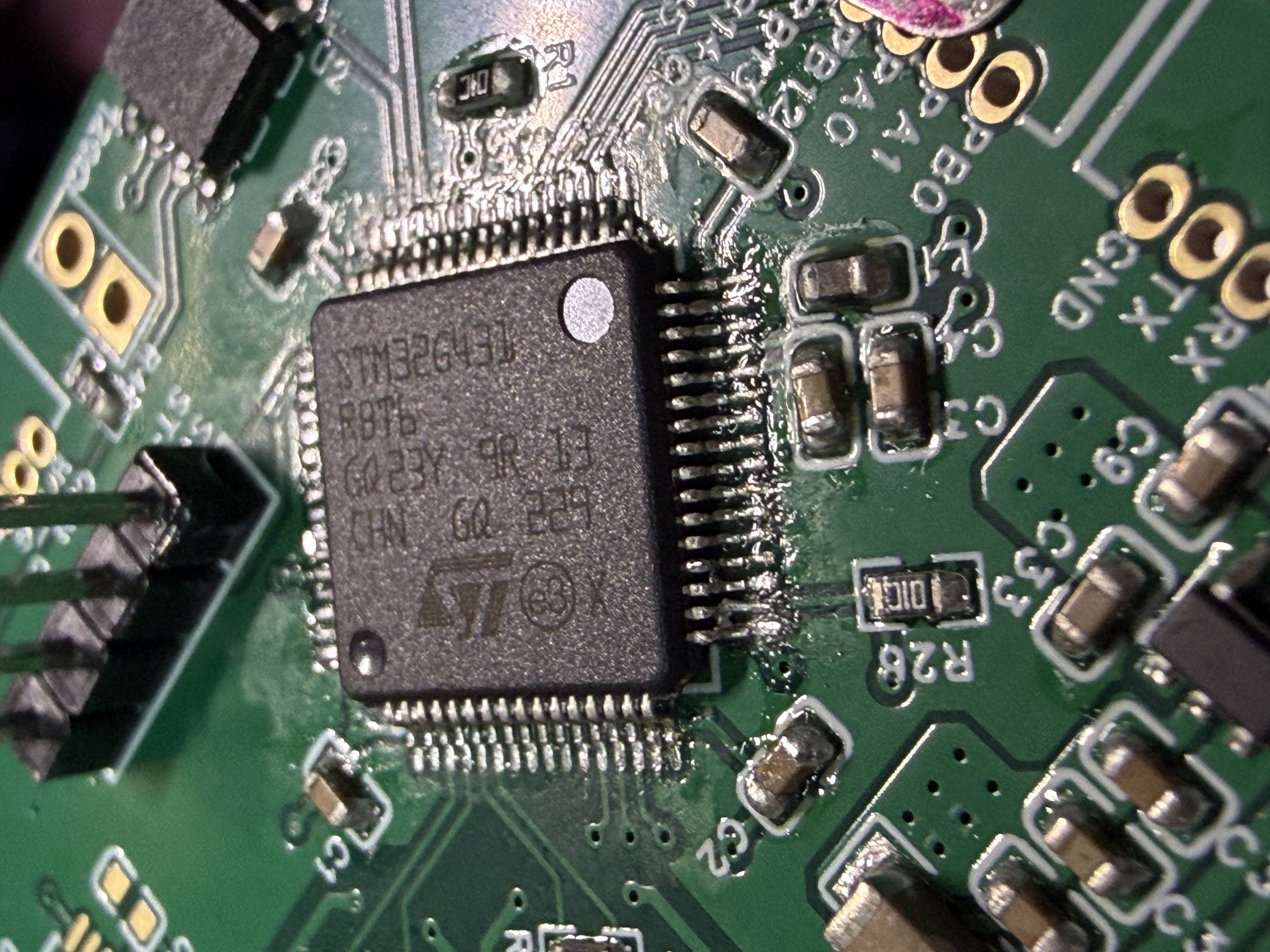
I iterated the electronics through two MCU generations — from an ESP32-S3 dev board to a hand-soldered STM32G431 board — checking all 14 bring-up points over SWD before moving on.
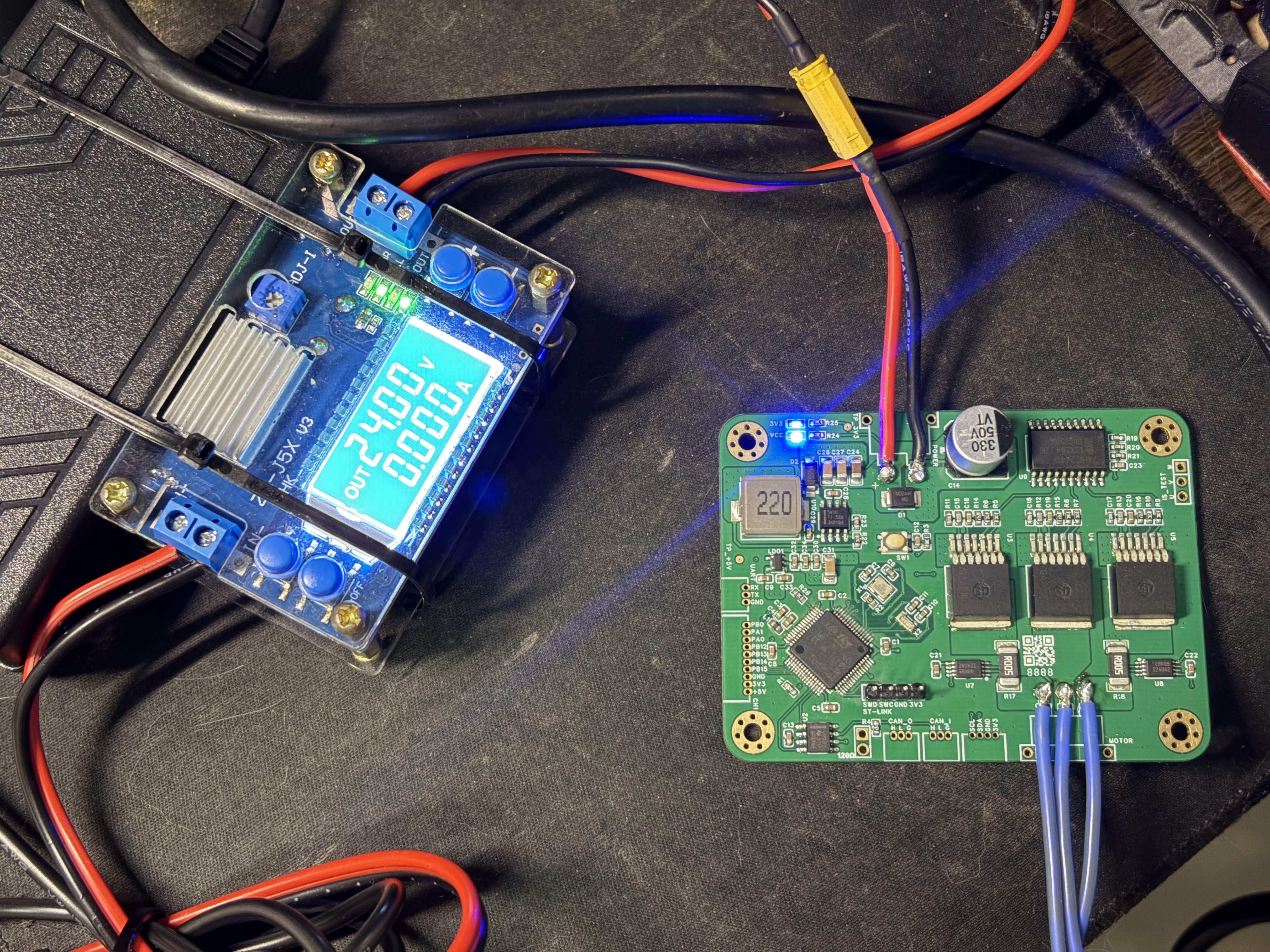
To prove it works I wrote a 39-case regression suite covering the protocol, read queries, write/read-back, control modes, calibration, watchdog and safety behaviour, and serial-timeout handling. All 39 passed on hardware. It now spins a 28BL20 motor on my bench.
This is the project where I stopped being only a mechanical designer. I designed a gearbox, printed it, bolted a motor to it — and realised none of it would move without a driver. So I learned the electronics end to end: schematic, PCB, firmware, and a test suite that proves it. That combination — mechanism and the electronics that drive it — is what I want to keep building.