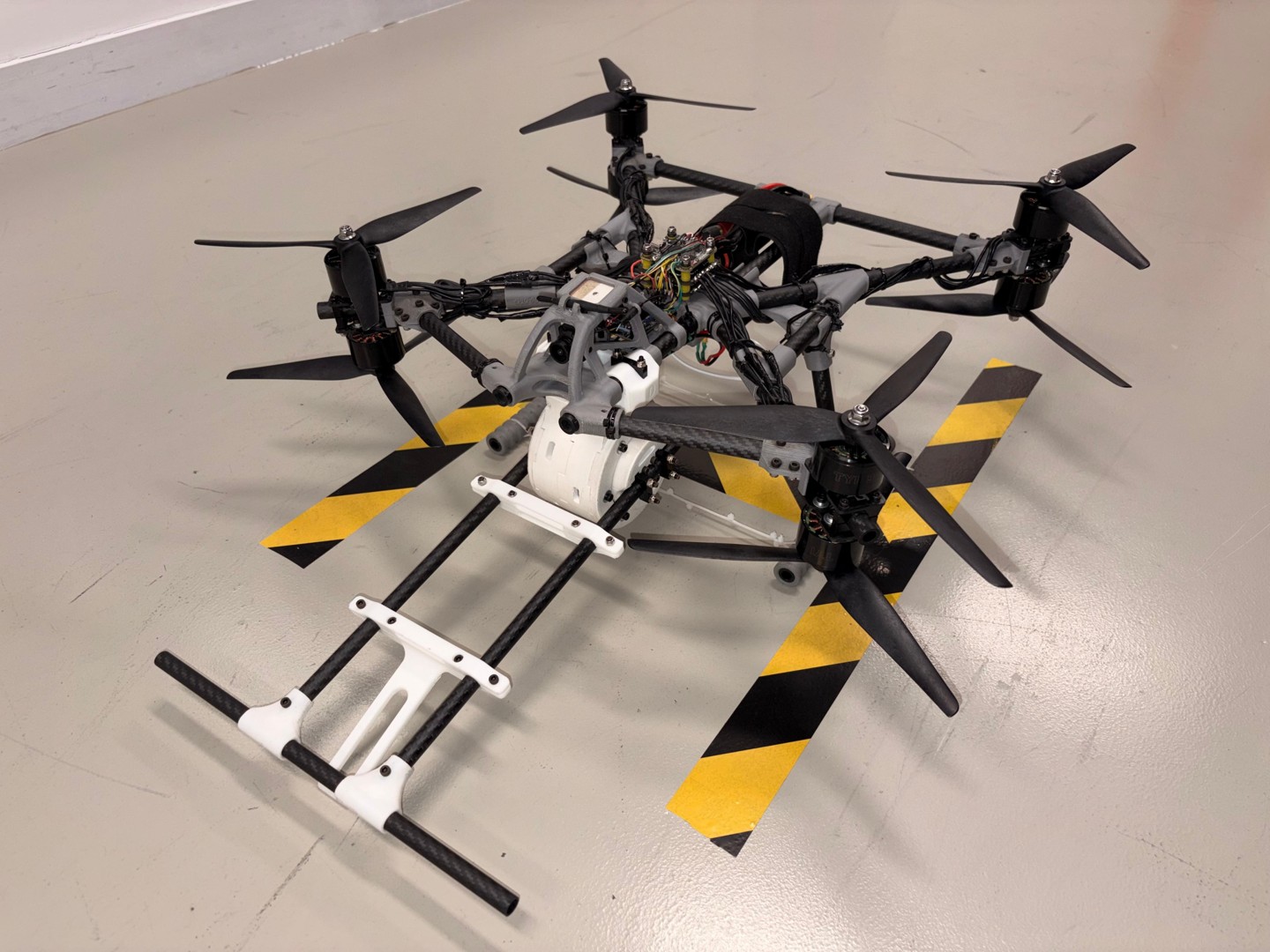
Humflight is a drone startup I co-founded to clean the outside of high-rise buildings — the curved, hard-to-reach glass that gondolas and rope access can't serve. I own the mechanical and hardware side: the airframe, the payload mechanism, and the electronics that fly it.
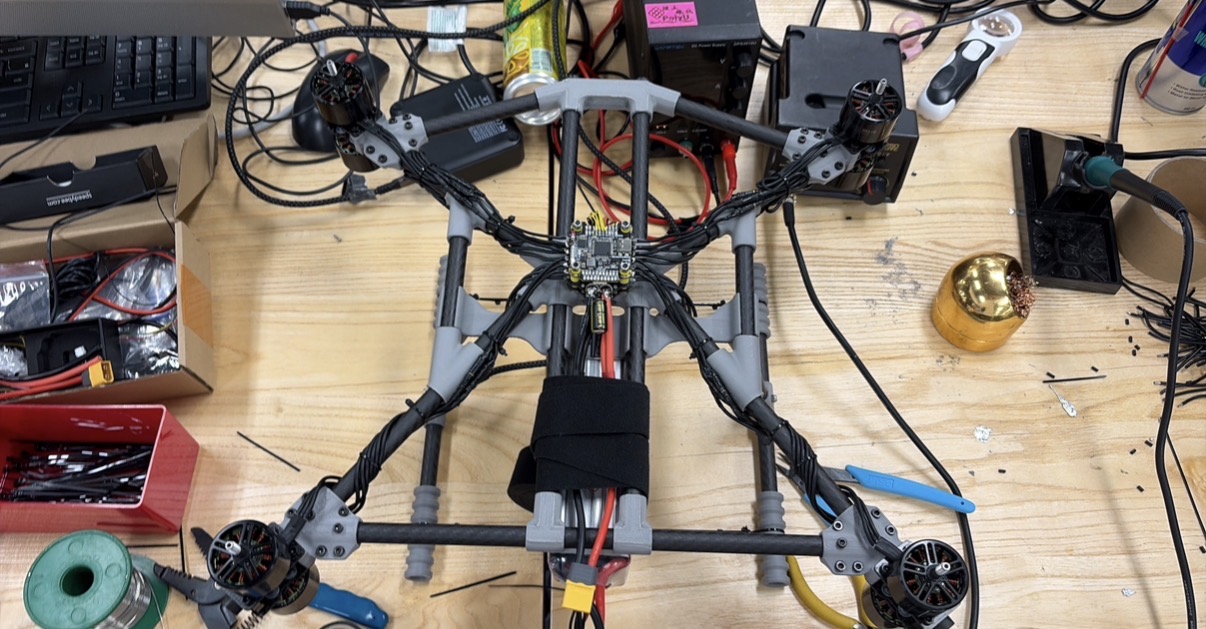
The platform is an X8 — eight motors on four coaxial arms. I designed the frame in SolidWorks and iterated it through several versions (v1.2 → v1.6.1), working out the arm layout, the motor mounts and the landing gear to keep the structure stiff but light. It's 3D-printed, with the flight controller, power distribution and radio links packed onto a printed central plate.
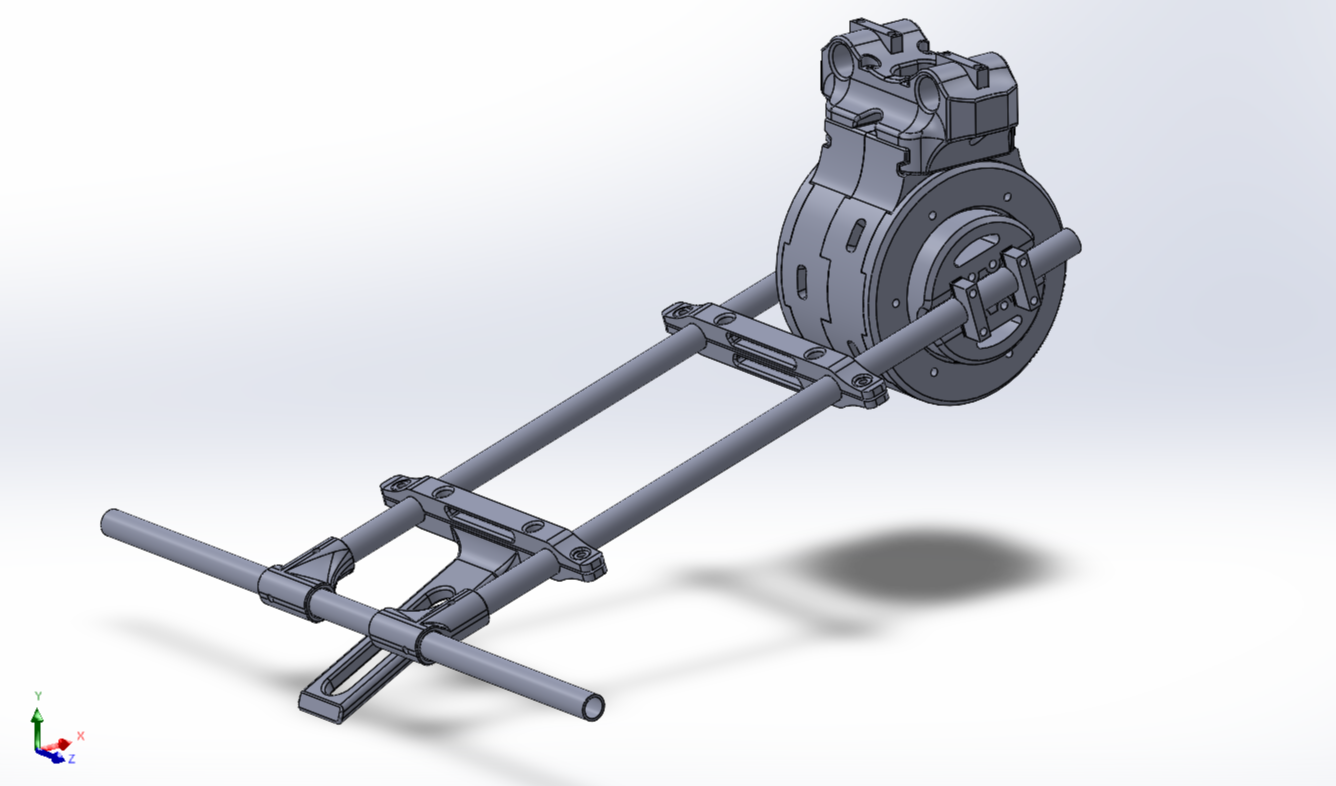
A separate unit does the cleaning. The arm I designed is what carries that unit and places it onto the wall — the mechanism and its actuation, so the cleaning robot can be set against the glass and picked back up.
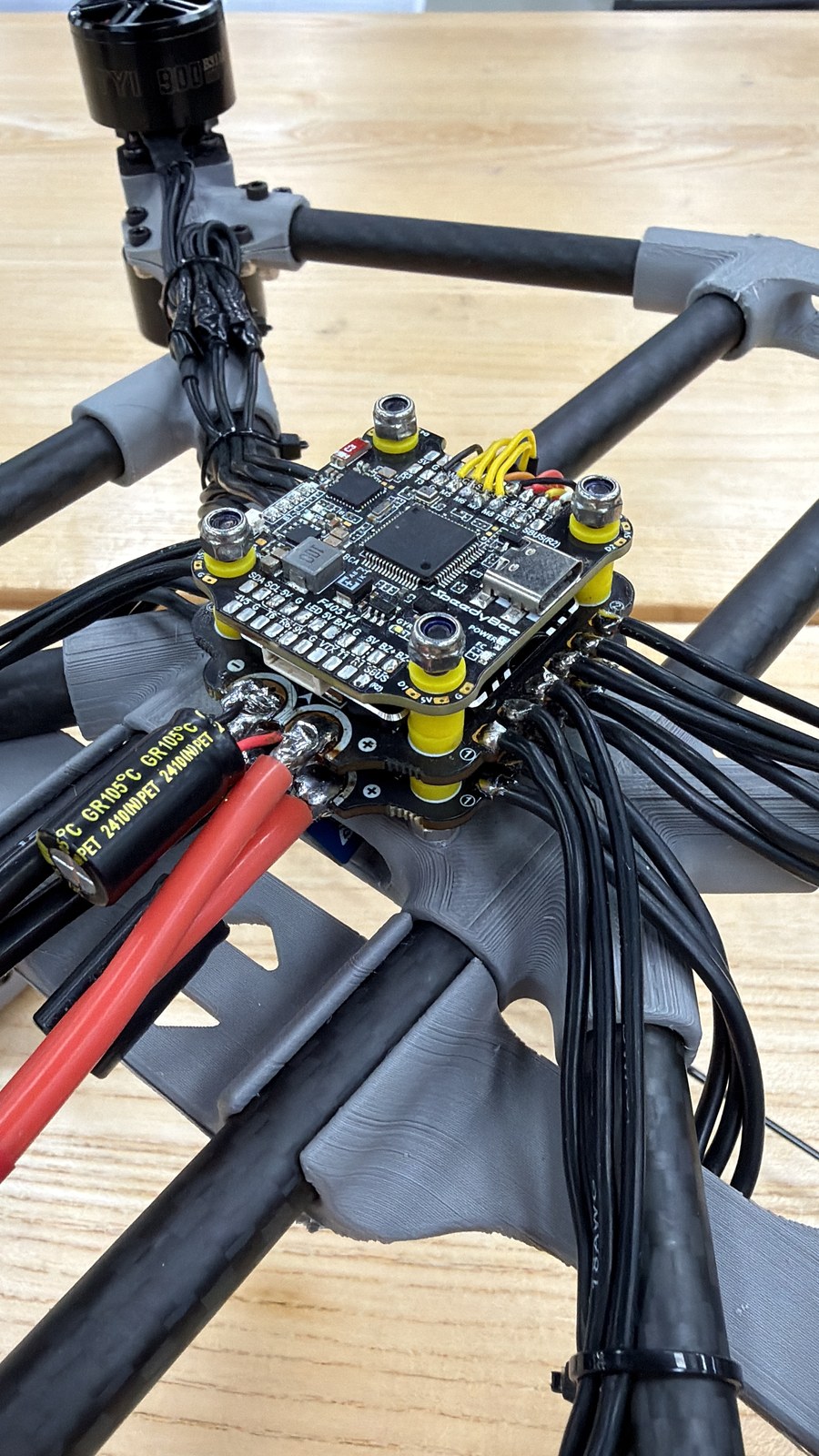
At the centre of the frame sits the flight control unit — a SpeedyBee F405 flight controller with an 8-in-1 ESC, wired to the eight motors, the camera and the radio links. Getting that stack compact, cool and serviceable on a printed plate was as much design work as the frame itself.
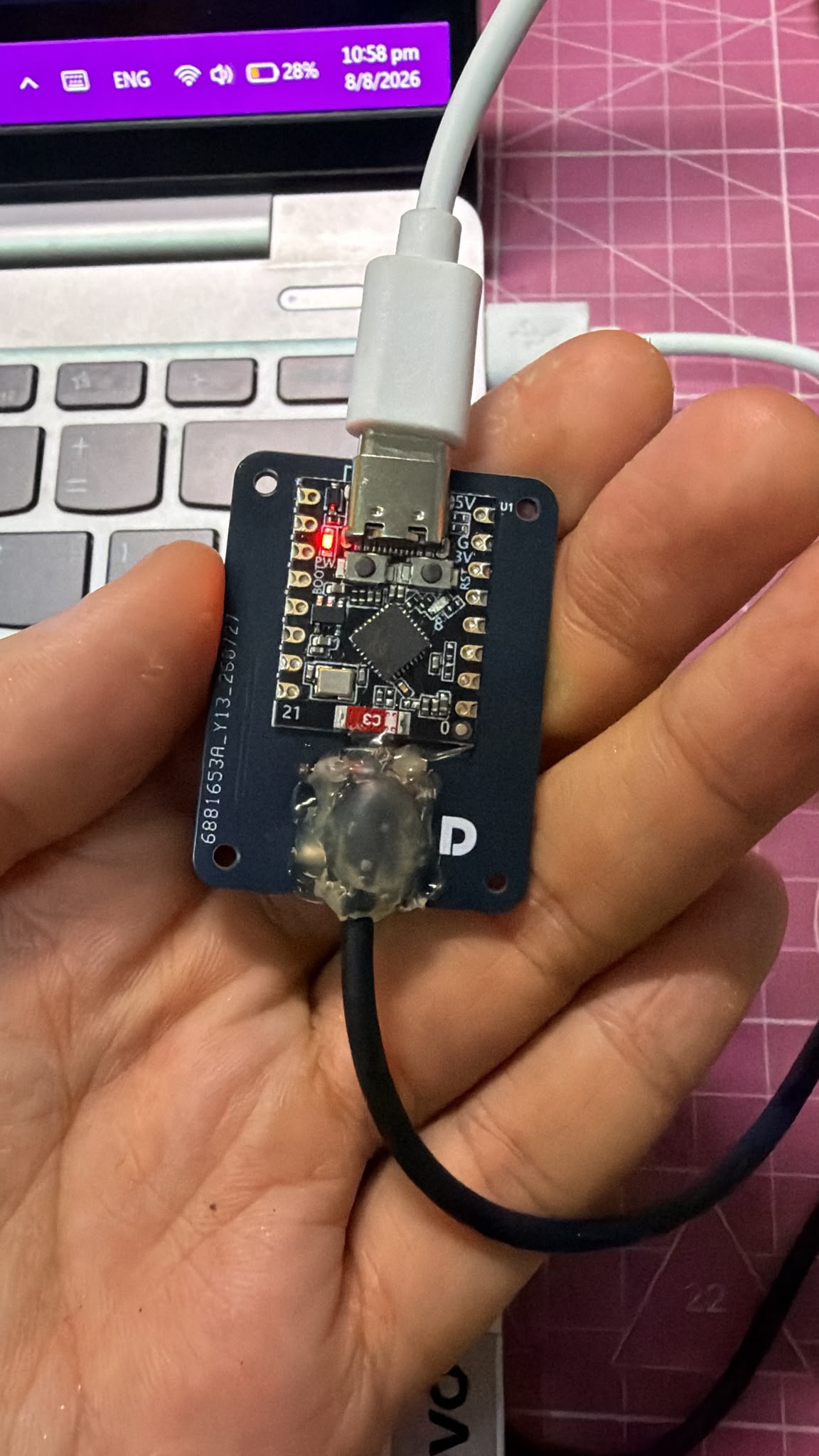
Separately, I built a small ESP32 board that plugs into the radio's trainer port, so a PC can act as a virtual student pilot while the transmitter keeps final authority — I laid out the PCB, printed the enclosure and wrote the firmware.
We took the idea through the university's Micro Fund programme — the video below is the pitch that came out of it.
We flight-tested the platform with the cleaning unit onboard, and I fly it as a CAD-registered remote pilot (Category A1 & A2).
Humflight taught me ownership and speed — how to take a hardware idea all the way to flight. What I'm looking for next is a different kind of challenge: a focused engineering role inside a large team, where I can go deep on mechanical design rather than spread myself across a whole company.